 Color Swatch Lab
Guides · CSL–034
How to paint over oil-based paint
Why latex fails on old oil paint
Old oil and alkyd paint dries to a hard, smooth, often glossy film. Water-based paint has a hard time gripping it. The new coat may look fine for weeks and then scratch off with a fingernail or come up with the painter’s tape. Benjamin Moore’s primer guide puts it directly: to repaint an existing oil-based topcoat, either use another oil-based topcoat or the appropriate bonding primer. It says it generally does not recommend an acrylic finish over a previously painted oil-based topcoat without added surface preparation. Sherwin-Williams’ exterior prep FAQ agrees on the outcome and the conditions. Acrylic latex can be applied over gloss alkyd, but only after the surface has been washed, sanded and cleared of chalk.
Oil paint is common on trim, doors, cabinets and older furniture. Glidden notes that older homes and antique furniture are often finished in oil-based paint. So any time you repaint woodwork you did not paint yourself, test before you buy.
Step 1: find out what is on the surface
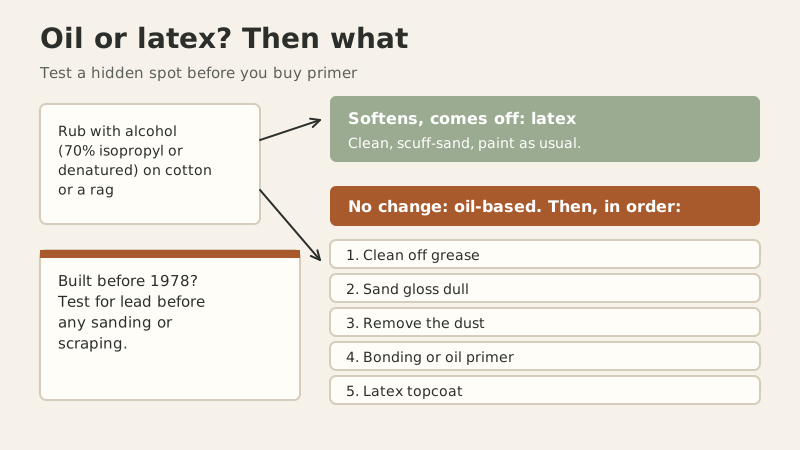
The alcohol rub. Benjamin Moore’s test uses a cotton ball soaked in 70% isopropyl (rubbing) alcohol, rubbed on a small, hidden area. Sherwin-Williams (on a rag) and Glidden (on a cotton ball) describe the same test with denatured alcohol. If the paint softens and comes off on the cotton, it is latex. If nothing happens, it is oil-based. Clean the spot first, so you are testing the paint and not grease on top of it.
The bend test. Sherwin-Williams gives a second check for exterior paint: pry off a loose chip and bend it. A latex chip is flexible. An oil chip is brittle and snaps. This works only where paint is already loose, but it is a useful confirmation.
Is it cured? If the oil paint is recent, it matters whether it has cured. Behr’s pro tips say the existing coat should be more than 7 to 30 days old and scrubbable. If it is not, cover it only with more alkyd or oil until it cures.
Step 2: clean it
Trim, doors and kitchen cabinets carry hand oil and cooking grease that stop any primer from bonding. Behr’s pro tips use trisodium phosphate (TSP) at 1/4 cup per gallon of warm water, then a rinse. Follow the dilution and safety directions on whatever cleaner you use, rinse well, and let the surface dry fully. The cleaning steps for walls are in how to prep walls before painting. Kitchen-specific degreasing is in how to paint kitchen cabinets.
Step 3: sand the gloss dull, then remove the dust
You are not trying to remove the old paint, only to take off the shine and give the primer something to grip. Benjamin Moore’s wall-prep page suggests 100 to 150 grit for oil-based surfaces. Behr’s pro tips use 180 to 220 grit. The two are not really in conflict. Use the coarser end on a heavy, hard gloss and the finer end on a satin or semi-gloss finish, or where scratches might show through a thin topcoat. The test is whether the surface looks uniformly dull, with no shiny patches. Then remove the dust completely with a vacuum, a damp cloth or a tack cloth, as Behr advises. A liquid deglosser can help on carved profiles where sandpaper will not reach. Use it according to its label, not as a replacement for cleaning.
Before you sand, check the age of the house. Under the EPA’s lead rules, paint in homes built before 1978 may contain lead, and dry sanding it makes dust that is hazardous, especially for children. Test first, and if lead is present, follow lead-safe painting practices or hire a certified firm.
Step 4: prime with a primer made for it
This is the step that matters most. You have two choices:
- A bonding primer. Glidden says the primer can be water-based as long as the label says it is a bonding primer. Benjamin Moore’s Insl-X STIX is one example, a waterborne bonding primer it recommends for glossy surfaces.
- An oil-based (alkyd) primer. Benjamin Moore’s guide notes that acrylic paints can be used over oil-based primers, and Purdue Extension describes the same oil-primer, acrylic-latex-topcoat system for exterior wood. Benjamin Moore also says some of its alkyd primers are not available in all areas because of VOC regulations.
If the wood shows tannin bleed or other stains, Glidden says to use a stain-blocking primer. Primer types and when to use each are covered in when to prime before painting.
Respect the primer’s own timing. The product sheets we read range widely. Behr says its primers can be topcoated after 1 hour. Benjamin Moore lists a 4-hour recoat for its Fresh Start All Purpose alkyd primer. Purdue Extension advises topcoating an oil-based primer within two weeks rather than leaving it exposed. Read the can you bought.
Step 5: topcoat with latex
Once the primer is ready, paint with a quality water-based enamel in the sheen you want. Behr suggests two hours between topcoats for its products. For trim, doors and shelves, which are pressed and handled, pick a block-resistant enamel and give it time before closing doors or loading shelves. That problem is covered in why painted doors and shelves stick. If you are not sure what sheen to use, see the paint sheen guide.
Outside the house
The same logic applies outdoors, with weather added. Sherwin-Williams’ exterior FAQ says acrylic latex can go over gloss alkyd once it has been washed, sanded and cleared of chalk. Many layers of old oil siding paint can still be close to failing, and a new coat adds stress. If the old paint is cracking or peeling, deal with that first, using why paint peels. Then paint in the weather window from exterior painting weather.
FAQ
- How can I tell if paint is oil-based or latex?
- Rub a hidden spot with a cotton ball or rag dampened with rubbing alcohol (Benjamin Moore uses 70% isopropyl) or denatured alcohol. Latex softens and rubs off. Oil-based paint usually is not affected. On loose exterior chips, Sherwin-Williams adds a bend test: latex flexes, oil snaps.
- Can I paint latex directly over oil-based paint?
- Not without preparation. Benjamin Moore says it generally does not recommend an acrylic finish over an oil-based topcoat without added surface preparation. Clean it, sand the gloss dull, remove the dust and use a bonding primer, or an oil-based primer, first.
- Do I need an oil-based primer over oil paint?
- No. A water-based bonding primer works too. Glidden says the label must say “bonding.” Benjamin Moore points to the appropriate bonding primer when you want to switch from oil to acrylic, and notes that acrylic paints can go over oil-based primers.
- What grit sandpaper should I use on oil-based paint?
- Benjamin Moore suggests 100 to 150 grit for oil-based surfaces and Behr uses 180 to 220. Use the coarser grit on a hard, high gloss and the finer one where scratches could show, until no shiny spots remain.
- Is it safe to sand old oil-based trim?
- Not until you know whether it contains lead. Paint in homes built before 1978 may contain lead. Test it first, and if it does, follow lead-safe work practices or hire a certified firm.
Sources
- How to Choose the Best Paint Primer (Benjamin Moore)
- Insl-X Stix Waterborne Bonding Primer (Benjamin Moore)
- How to Prepare Walls for Painting (Benjamin Moore)
- Exterior Surface Preparation FAQs (Sherwin-Williams)
- Painting Over Oil-Based Paint (Glidden)
- Tips on Painting Over Oil-Based Paint (Behr Pro)
- Paint Failure Problems and Their Cure, NCR-133 (Purdue University Cooperative Extension)
- Reduce the Risk of Lead Exposure at Home (US EPA)
- Lead-Safe Renovations for DIYers (US EPA)
Sources checked October 30, 2026. Rules of thumb on this page are our editorial guidance, not standards.
Judging a real can of paint, not a screen chip: how to order samples · how we plan to measure color · how to test a sample.